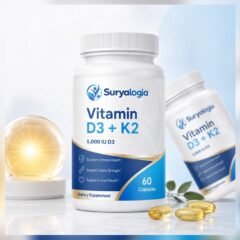

Vitamin D3 + K2: Why These Two Nutrients Are Often Paired


Vitamin D3 and vitamin K2 frequently appear together in modern supplement formulas. They are different nutrients with distinct roles, but both are associated with normal calcium metabolism and bone health. Understanding what each vitamin does can make it easier to evaluate a D3 + K2 product.
What is vitamin D3?
Vitamin D is a fat-soluble vitamin that helps the body absorb calcium and supports normal bone, muscle, and immune function. Vitamin D3, also called cholecalciferol, is one of the forms commonly used in dietary supplements.
Where does vitamin D come from?
The body can produce vitamin D when skin is exposed to sunlight. Vitamin D is also found in some foods, including fatty fish, egg yolks, and fortified products. Lifestyle, season, geography, age, skin exposure, and diet can all influence vitamin D intake and status.
What is vitamin K2?
Vitamin K is another fat-soluble vitamin. Vitamin K2 refers to a group of compounds known as menaquinones. MK-7 is a common form used in supplements. Vitamin K contributes to normal blood clotting and maintenance of normal bones.
Why are D3 and K2 often combined?
Because both nutrients are involved in systems related to calcium and bone health, supplement brands often place them in the same formula for convenience. That does not mean everyone needs the same amount of both nutrients. Individual requirements vary, and the serving size on a product should be considered in the context of diet, other supplements, and professional advice where appropriate.
What should you check on the label?
- The amount of vitamin D3 per serving, shown in micrograms and often IU.
- The amount and form of vitamin K2, such as MK-7.
- The recommended serving size.
- Any other vitamins, oils, fillers, or capsule ingredients.
- Warnings and storage instructions.
Should you take D3 + K2 with food?
Both vitamins are fat-soluble, so many people take them with a meal that contains some dietary fat. Follow the instructions on the specific supplement rather than relying on a one-size-fits-all rule.
An important note about vitamin K
Vitamin K can interact with certain anticoagulant medications. Anyone using warfarin or another medication that affects blood clotting should speak with a qualified healthcare professional before starting a vitamin K supplement. Do not change vitamin K intake suddenly without professional guidance if your medication requires consistent vitamin K intake.
Keep the bigger picture in mind
A supplement should support, not replace, a nutritious diet and healthy lifestyle. Adequate protein, minerals, physical activity, and other nutrients all contribute to maintaining normal bones and overall wellness.
Explore Suryalogia Vitamin D3 + K2 if you are looking for a convenient combination formula for your daily vitamin routine.
General information only. This article is not medical advice. Speak with a qualified healthcare professional before supplementing if you are pregnant, nursing, taking medication, or managing a medical condition.